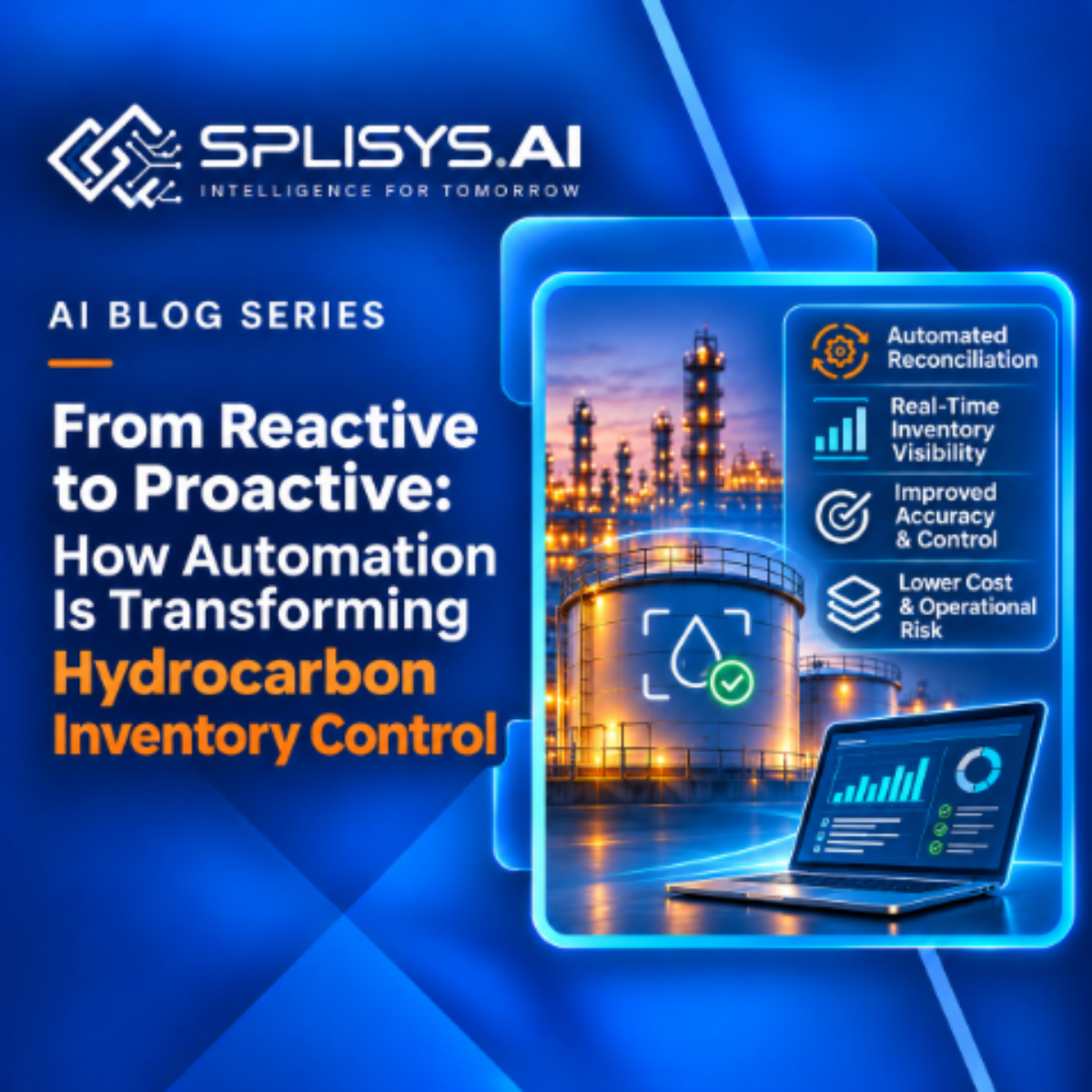
What if hydrocarbon inventory reconciliation didn’t have to be a race to catch up?
For many Oil & Gas organizations, inventory reconciliation is a process of looking backward. Teams collect transactions, compare measurements, review inventory movements, and investigate discrepancies after they have occurred. By the time an imbalance is identified, employees may need to reconstruct hours or even days of operational activity to determine what happened. It’s a familiar challenge across complex Energy operations.
But what if reconciliation could become a more proactive process?
Automation is creating opportunities for Oil & Gas organizations to move beyond reactive inventory reconciliation toward more timely visibility, stronger inventory control, and faster operational response.
What Is Proactive Hydrocarbon Inventory Control?
Proactive hydrocarbon inventory control is an approach to monitoring, validating, and reconciling inventory information that helps organizations identify potential discrepancies earlier rather than relying exclusively on retrospective reviews.
Instead of waiting until the end of a reconciliation cycle to discover an issue, organizations can use automation to perform recurring validations, compare relevant records, and highlight potential inconsistencies as data becomes available.
The goal isn’t necessarily to eliminate periodic reconciliation.
It’s to make inventory control more continuous, consistent, and actionable.
The Limitations of Reactive Inventory Reconciliation
Traditional reconciliation processes often follow a familiar sequence:
Inventory activity occurs. Data is collected. Records are compared. Discrepancies are identified. Investigations begin.
This approach can create several operational challenges.
Delayed Visibility
When reconciliation occurs primarily at scheduled intervals, discrepancies may remain unidentified until the next review.
Time-Consuming Investigations
The longer an issue remains unresolved, the more transactions, measurements, and operational events teams may need to examine.
Accumulating Exceptions
Unresolved discrepancies can carry forward into subsequent reconciliation cycles, creating additional work and making it more difficult to isolate the original issue.
Limited Operational Insight
When reconciliation information is distributed across systems and spreadsheets, stakeholders may struggle to obtain a timely view of inventory status.
These challenges become increasingly difficult to manage as operations expand across additional facilities, products, and systems.
How Does Automation Enable More Proactive Hydrocarbon Inventory Control?
Automation can help organizations shift from periodic manual review toward more frequent, systematic reconciliation activities.
Rather than waiting for employees to initiate every validation or comparison, automated processes can perform defined activities according to established rules and schedules.
Manual reconciliation often requires significant employee time, limiting how frequently organizations can perform comprehensive reviews.
Automation can reduce the effort associated with routine validation, making more frequent reconciliation activities practical.
Depending on data availability and system integration, organizations may be able to identify discrepancies earlier in the operational cycle.
Hydrocarbon inventory positions are influenced by numerous activities, including receipts, transfers, shipments, production, and storage movements.
Automation can help compare relevant movement information with recorded inventory positions and identify records that require further review.
This provides a more systematic approach to maintaining inventory visibility across complex operations.
Different facilities may use different reconciliation procedures, spreadsheets, and validation practices.
Automation offers an opportunity to establish consistent rules for comparing inventory information and identifying discrepancies.
Standardized processes can help improve operational consistency while allowing organizations to account for facility-specific requirements.
When discrepancies are identified earlier, teams may have more timely access to the information needed for investigation.
For example, an unexpected inventory variance could prompt a review of recent product movements, measurement records, or missing transactions.
Automation can help organize this information so experienced professionals can evaluate the situation and determine appropriate actions.
Hydrocarbon inventory reconciliation often connects operational activities with financial and accounting processes.
Unresolved inventory differences can create additional questions during inventory valuation, reporting, and period-end activities.
By improving the timeliness and consistency of reconciliation information, automation can support better coordination between operational and financial stakeholders.
Why Proactive Inventory Control Matters for SAP-Enabled Energy Organizations
SAP provides critical transactional and enterprise information for many Oil & Gas companies.
However, operational inventory information may originate from multiple systems that support terminal management, measurements, pipeline activity, storage operations, and product movements.
Effective inventory control requires relevant information from these environments to be evaluated together.
Automation can complement SAP by helping organizations validate and compare records across connected systems, identify inconsistencies, and support established reconciliation workflows.
For SAP-enabled Energy organizations, this creates an opportunity to strengthen existing business processes without requiring a wholesale replacement of core enterprise systems.
The Role of Human Expertise in Proactive Inventory Management
Proactive inventory control doesn’t mean removing people from the process.
Hydrocarbon operations are complex.
A variance may be explained by transaction timing, measurement differences, operational activity, or other legitimate business conditions.
Automated rules can help identify information that falls outside expected parameters.
But experienced Oil & Gas professionals remain essential for understanding the operational context and determining the appropriate resolution.
The most effective approach combines automation for consistency and speed with human expertise for investigation and decision-making.
Building a Foundation for Better Hydrocarbon Inventory Control
Moving toward proactive reconciliation doesn’t require organizations to automate every activity immediately.
A practical starting point is to identify where earlier validation and greater inventory visibility would provide the most value.
Organizations can begin by evaluating:
These considerations can help establish priorities for introducing automation into existing reconciliation workflows.
The Future of Hydrocarbon Inventory Reconciliation Is More Proactive
For Energy organizations, the opportunity isn’t simply to complete reconciliation faster.
It’s to strengthen the overall approach to inventory control.
More timely validation, improved visibility, consistent business rules, and earlier identification of discrepancies can help organizations move toward more proactive inventory management.
And that shift can have implications across operations, financial reporting, and business decision-making.
At Splisys, we’re focused on helping Oil & Gas organizations modernize critical SAP-enabled business processes through industry-specific expertise and practical automation.
What if the next generation of hydrocarbon inventory reconciliation helped you identify potential issues before they became larger operational challenges?
We’re working toward a more automated approach to hydrocarbon inventory reconciliation.
Something new is coming from Splisys. Stay tuned.
Ready to Strengthen Your Hydrocarbon Inventory Control?
Discover how Splisys can help your organization evaluate opportunities to automate reconciliation activities, improve inventory visibility, and support more proactive inventory management across your SAP environment.
Frequently Asked Questions
What is proactive hydrocarbon inventory reconciliation?
Proactive hydrocarbon inventory reconciliation uses more frequent validation, automated comparisons, and timely exception identification to help organizations detect inventory discrepancies earlier.
How does automation improve hydrocarbon inventory control?
Automation can improve inventory control by standardizing validation rules, comparing inventory information across relevant systems, identifying inconsistencies, and supporting more timely investigations.
Can hydrocarbon inventory reconciliation be automated in SAP environments?
Yes. Specialized automation solutions can complement SAP environments by using relevant inventory, transactional, and operational information to support reconciliation workflows.
Does proactive inventory reconciliation require real-time data?
Not necessarily. Organizations can improve reconciliation timeliness through scheduled or more frequent automated validation. Real-time capabilities depend on the availability of source data and system integration.
What is the difference between reactive and proactive inventory reconciliation?
Reactive reconciliation typically identifies discrepancies during periodic reviews after inventory activity has occurred. Proactive reconciliation uses more frequent validation and monitoring to help detect potential issues earlier.
Splisys uses the data submitted through this form to send you relevant marketing insights, blog updates, and learning resources. To learn more, read our Privacy Policy.